
Why Travelers Are Ditching Physical SIM Cards
The Ultimate Guide to Activating Your International eSIM Right Now
Over 80% of travelers overpay for roaming simply because they don’t know international eSIM exists. An international eSIM is a digital SIM card that lets you activate a local data plan in over 190 countries without swapping physical cards. This means you can stay connected the moment you land, avoiding surprise bills and hunting for Wi-Fi. To use it, just scan a QR code before your trip and choose a plan that fits your needs.
Why Travelers Are Ditching Physical SIM Cards
Travelers are ditching physical SIM cards for international eSIM because it eliminates the frantic search for a local vendor upon arrival. Instead of hunting for a shop or swapping tiny cards that can be easily lost, you activate a plan instantly via an app before you even board the flight. This allows you to stay connected immediately with mobile data for maps and rideshares. The primary practical win is the ability to keep your primary home number active for calls and banking OTPs while running a separate eSIM profile for high-speed local data. No more fiddling with paperclips or tracking multiple fragile cards—everything is managed digitally in your settings.
How eSIM technology transforms connectivity abroad
eSIM technology transforms connectivity abroad by eliminating the need to hunt for local SIM cards upon arrival. Travelers can purchase and activate a data plan from a provider like Airalo or Nomad before departure, ensuring instant network access the moment they land. This enables seamless switching between local carriers in different countries without physically swapping cards. A single eSIM profile can store multiple plans, allowing users to maintain a home number for verification while running a separate data plan for navigation and messaging. The core advantage lies in instant activation across borders, removing the friction of traditional roaming or store visits.
eSIM technology transforms connectivity abroad by providing immediate, multi-network access and plan flexibility, eliminating physical card swapping.
Key differences between plastic SIMs and embedded profiles
The core distinction lies in physicality versus software. A plastic SIM is a removable chip requiring manual insertion and swapping to change carriers, while an eSIM is a rewritable profile embedded in the device’s hardware. This means travelers switch between carriers by scanning a QR code or entering a code, not hunting for a SIM ejector tool. Plastic SIMs are tied to a single network until physically replaced; embedded profiles allow multiple operator profiles stored simultaneously, with instant activation via a menu. Plastic SIMs also risk loss or damage during transit, a non-issue for a permanently soldered eSIM chip.
Plastic SIMs require physical handling and carrier locking, whereas embedded profiles enable remote, multi-carrier switching and profile management without hardware removal.
Top Providers Shaping the Connected Globe
In the connected globe, top providers like Airalo and Holafly shape how travelers experience international eSIMs. Airalo offers granular, country-specific data packs built for spontaneous explorers, letting a backpacker activate a local profile seconds after landing in Bangkok. Holafly, in contrast, prioritizes unlimited data across regions, so a digital nomad in Lisbon can stream video calls without pause. These providers don’t just sell connectivity; they define the rhythm of movement—whether it’s a quick layover in Dubai or a month-long trek through Patagonia. By stripping away physical SIM swaps and roaming contracts, they turn a smartphone into a passport, making global access feel less like a service and more like a seamless extension of daily life.
Market leaders like Airalo, Holafly, and GigSky compared
Airalo dominates with massive country coverage and competitive global data pools, while Holafly counters with strictly unlimited plans that eliminate data anxiety for heavy users. GigSky carves a niche through robust enterprise-grade reliability and multi-device support. For a quick comparison:
- Airalo: Best for budget-conscious travelers needing flexible top-ups across 200+ regions.
- Holafly: Ideal for streamers and map-hoppers who prefer fixed-price unlimited data.
- GigSky: Suits professionals who require consistent connectivity and simultaneous device management.
Regional specialists versus global coverage networks
For international travel, choosing between regional specialists versus global coverage networks hinges on your itinerary. A regional specialist, like one focused on Asia or Europe, offers deeper, more stable connectivity within that zone, often with local-number features and lower per-GB costs. A global network spreads its coverage thinner, prioritizing multiple continents but sometimes delivering slower speeds or higher latency in specific countries. The practical trade-off is depth versus breadth: specialists excel in their home turf, while global networks provide a one-profile-fits-anywhere convenience for multi-continent trips.
Selecting the Best Plan for Your Journey
When selecting the best plan for your journey, first match the esim’s coverage map to your specific destinations, prioritizing providers that offer native networks rather than roaming partners. Examine the plan’s data cap against your typical usage; a 10GB global pass suits light browsing, while streaming or navigation demands an unlimited plan. Check validity periods carefully to ensure the plan spans your entire trip without forced extensions. Compare top-up flexibility for adding data mid-trip, as some plans lock you into a single tier. A regional plan may offer better value than a global one if you are only transiting through a single continent. Finally, choose between a fixed-day allowance or a rolling 24-hour window to avoid losing unused data across time zones.
Data-only packages versus voice and text bundles
When selecting an international eSIM, your communication needs dictate the choice between data-only packages and voice and text bundles. Data-only plans excel for travelers reliant on messaging apps and online navigation, offering higher data caps at lower prices by bypassing traditional carrier minutes. Conversely, voice and text bundles are essential when local phone numbers or reliable call quality are required, such as for two-factor authentication or contacting local services without app dependency. For hybrid usage, prioritize data-only packages with VoIP compatibility, as they typically provide the most cost-effective flexibility while allowing WhatsApp or Skype for calls, avoiding redundant charges for legacy cellular services.
Short-term roaming passes versus long-term global subscriptions
For shorter trips, a short-term roaming pass for a specific region offers targeted value with a fixed data cap, avoiding the overhead of an ongoing subscription. In contrast, a long-term global subscription is the superior choice for frequent travelers or digital nomads, as it provides continuous coverage across multiple countries without repeated purchases. A short-term pass is a dead-end; a global subscription builds usable history and flexibility over months. Q: When should I choose a short-term roaming pass over a long-term global subscription? Only for a single, predictable journey under a few weeks; for anything longer or more frequent, the global subscription’s pay-per-period model offers better overall cost and convenience.
Activating Your Virtual Chip Step by Step
Activating your international eSIM’s virtual chip starts after purchase. First, scan the QR code sent via email or install the provider’s app. Your device will prompt you to add a cellular plan; follow the on-screen steps to download the profile. Once installed, set it as your data line in Settings, keeping your home SIM for calls if desired. The virtual chip activates automatically upon connecting to a local network abroad.
A quick tip: activate it at home over Wi-Fi before you travel to avoid roaming fees during setup.
Then, toggle data roaming on and you’re live—no physical swap needed.
Checking device compatibility before you go
Before you buy an international eSIM, **check device compatibility** first—it is a quick but crucial step. Not every phone works with eSIMs, so visit your manufacturer’s settings to confirm support. Old models or region-locked phones might lack the required hardware. Also, ensure your device is carrier-unlocked, or the virtual chip won’t activate. Skipping this check abroad means no data, so take two minutes to verify now. That small effort saves you from a frustrating, offline trip.
Installing a QR code or downloading an app
After purchasing your international eSIM plan, install the profile via QR code or download the provider’s app. For QR activation, open your phone’s settings, select “Add Cellular Plan,” and scan the code sent to your email. Using the provider’s app is often faster: install it, log into your account, and tap “Activate eSIM” to push the profile directly to your device. Confirm the installation by naming the line (e.g., “Travel https://baztel.co/esim-plans/esim-china-mainland Data”) and setting it as default for mobile data. No physical card handling is needed—completing either method takes under two minutes.
Scan the QR code or open the provider’s app to activate your international eSIM immediately without touching a physical SIM.
Saving Money While Staying Online
An international eSIM lets you bypass expensive roaming fees by purchasing local or regional data plans directly on your device, often at a fraction of the cost. To maximize savings, install a top-up eSIM before departure and disable your primary line’s data. Compare multi-country plans for your entire itinerary rather than buying separate single-country eSIMs for each stop. Choosing a slightly slower data speed tier, like 4G instead of 5G, can significantly stretch your budget for basic navigation and messaging. Always monitor your usage through the eSIM’s app to avoid prematurely buying large, unnecessary data bundles.
Avoiding shock bills from traditional roaming fees
Dodging surprise roaming bills is one of the biggest wins when you switch to an international eSIM. Traditional carriers often charge exorbitant daily or per-megabyte rates abroad, but with an eSIM, you buy a local or regional data plan upfront. This means predictable data costs with zero hidden fees. To avoid shock bills, follow this simple sequence:
- Turn off your primary SIM’s data roaming in your phone settings before departure.
- Purchase and install your eSIM plan while still on Wi-Fi.
- Set the eSIM as your default line for mobile data when you land.
That’s it—no more panicking when you see a bill after your trip.
Comparing per-gigabyte costs across regions
When comparing per-gigabyte costs across regions with an international eSIM, you’ll find massive variance; a GB in Europe might cost $1, while in parts of Africa it can exceed $10. Focus on regional pricing per gigabyte to avoid overpaying—choose a plan tailored to your specific destinations rather than a global flat rate.
- Compare single-region plans for cheaper rates if traveling to one area like Asia or the Americas.
- Check per-GB costs for high-usage countries; some eSIMs charge a premium for data-heavy zones.
- Use poolable data plans to stretch dollars across multiple countries without rebuying expensive top-ups.
Navigating Coverage and Speed Across Continents
Navigating coverage and speed across continents with an international eSIM requires understanding that network quality shifts dramatically between regions. You might enjoy 5G in Europe but drop to 3G in rural South America; always check your provider’s coverage map for each continent before departure. Speed also depends on local infrastructure, so prioritize eSIMs that partner with multiple carriers per country to auto-switch when one slows down. Q: How do I ensure consistent speed when hopping from Asia to Africa? A: Activate a global plan that reroutes through stable 4G/5G hubs rather than relying on a single foreign network.
How local network partnerships affect performance
Local network partnerships directly dictate an international eSIM’s performance by determining which physical towers your device connects to. A carrier that has deep local partnerships grants you priority access to high-capacity 4G/5G infrastructure, minimizing congestion during peak hours. Conversely, a thin partnership often routes you to overloaded roaming gateways, causing latency spikes and throttled throughput. Each partner’s backhaul quality also sets your realistic speed ceiling; premium partners offer fiber-linked antennas, while budget aggregators share limited bandwidth. The geographic density of partners further affects consistency—urban areas with multiple partners ensure fallback options if one tower fails, whereas rural routes rely on a single partner, making performance brittle.
Q: How do local network partnerships affect performance when crossing borders? When you move between countries, the eSIM automatically switches to a newly negotiated partner. If that partner has robust peering, handoff is seamless with zero re-authentication delay; if the partnership is shallow, you may experience a 10–20 second blackout as the device negotiates lower priority access, degrading real-time app performance.
5G availability and throttling policies abroad
When using an international eSIM abroad, 5G availability isn’t guaranteed; it depends on your phone’s compatibility with local bands and the provider’s roaming agreements. Many eSIMs default to 4G to save money, and you might need to manually select 5G in settings. Throttling policies vary harshly—plans often cap high-speed data (e.g., 1GB per day at 5G speed), after which you’re slowed to 2G/3G levels for browsing. Always check if “unlimited” data includes a hidden speed limit.
- Verify your phone supports the destination’s 5G bands.
- Look for eSIMs with dedicated 5G roaming tiers to avoid automatic throttling.
- Daily data caps reset after 24 hours, but speeds drop immediately once exceeded.
- Streaming or video calls often trigger full-speed throttling first.
Managing Multiple Lines on One Device
Stuck in a Tokyo café, I juggled three lives on one device: my UK work line for urgent emails, a local Japanese eSIM for maps, and a US personal number for family calls. Managing multiple lines on one device with international eSIM means swapping profiles in settings without ejecting a physical SIM tray—a lifesaver when hopping between data plans. I keep my home number active for SMS while using a local eSIM for cheap data, all visible in the same phone menu. No more swapping tiny cards mid-journey; just tap to prioritize which line handles calls or hotspot traffic. That single iPhone became my travel command center, balancing costs and connectivity without extra gadgets cluttering my pocket.
Juggling home numbers and travel data seamlessly
Juggling home numbers and travel data seamlessly relies on an eSIM’s ability to maintain your primary line for calls and texts while activating a separate data-only eSIM for the destination. You configure the device to use the travel eSIM for cellular data, keeping your home SIM active for iMessage and SMS verification. A clear sequence ensures this works:
- Install the travel eSIM before departure while your home SIM remains active.
- Navigate to your device’s cellular settings and designate the travel eSIM as the primary data line.
- Set the home line for voice and SMS, enabling dual-SIM standby functionality.
This prevents missed calls from your home number while you browse abroad, as the device intelligently switches data paths without manual intervention.
Keeping your primary SIM active for OTPs and calls

When traveling internationally with an eSIM for data, keeping your primary SIM active for OTPs and calls is crucial. Simply insert your home SIM into a secondary phone or leave it in your device with data roaming turned off. Most modern phones let you assign your primary line exclusively for voice and SMS while the eSIM handles data. This setup ensures you still receive two-factor authentication codes and incoming calls from banks or services. Just be aware that your carrier may charge standard roaming rates for any calls you answer or texts you receive abroad.
- Disable mobile data on your primary SIM to avoid accidental roaming charges.
- Keep your primary line assigned for voice and SMS only in your phone’s SIM settings.
- Test receiving an OTP before you depart to confirm the configuration works.

Overcoming Common Setup Challenges
Overcoming common setup challenges with an international eSIM starts with a solid Wi-Fi connection—activation often needs internet access. If your eSIM doesn’t show up right away, manually add the QR code or SM-DP+ address from the provider’s email. For dual-SIM phones, label your eSIM clearly and set it as the primary data line while keeping your home SIM on for calls or texts.
Pro tip: Download the eSIM profile at home before you travel to avoid spotty airport Wi-Fi.
If the network drops, toggling airplane mode or selecting “Search for networks” manually often fixes it. Stuck on a setup step? Restart your device—it forces a refresh—then check APN settings if data still fails.
Troubleshooting activation errors at airports
If your international eSIM won’t activate right after you land, first toggle airplane mode on and off to force a fresh network search. Many airport zones have weak roaming links, so try manually selecting a local carrier from your phone’s network settings instead of using “automatic.” A quick reboot often resolves stuck activation states caused by handoffs between airport towers. If the error persists, scan your QR code again over the airport’s free Wi-Fi to ensure the profile downloads fully. Airport activation errors usually clear with these steps, so you can start using data within minutes.
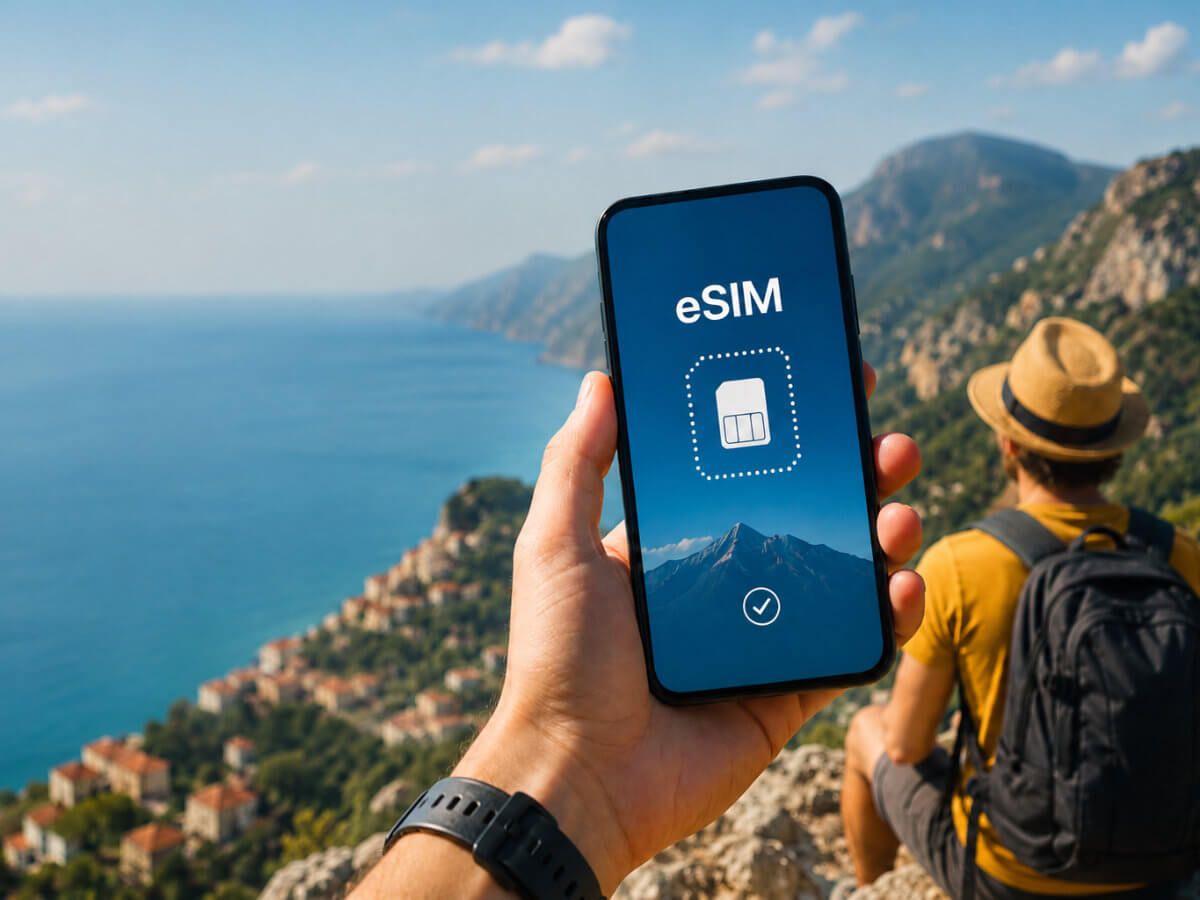
What to do if your phone rejects the profile
If your phone rejects the eSIM profile, first verify the activation code or QR code hasn’t expired—most international eSIMs require setup within a set window. Next, confirm your device isn’t carrier-locked, as this blocks foreign profiles. For a successful eSIM installation, follow these steps:
- Delete any existing eSIM profiles to avoid conflicts.
- Restart your phone, then re-scan the QR code or manually enter the details under Cellular Settings.
- Ensure your APN settings match the provider’s data instructions—often found in your confirmation email.
If it still fails, contact the eSIM provider for a fresh QR code, as corrupted data can cause rejection.
Future Trends in Cross-Border Connectivity
The future of cross-border connectivity hinges on dynamic network orchestration, where your international eSIM autonomously aggregates multiple local carriers. Expect seamless handoffs between 5G standalone and satellite backhaul, eliminating signal drops at borders. Instead of preset data packages, your eSIM will intelligently lease real-time slices of capacity from local providers, billing by byte and latency class. A key shift is the “virtual home network” where your device’s SIM profile continuously negotiates with foreign nodes to maintain your original provider’s QoS pledges.
Your eSIM will no longer just switch networks; it will constantly renegotiate service-level agreements per session, ensuring you always run on the best available infrastructure without manual intervention.
This trend moves connectivity from passive roaming to an actively managed, application-aware link.
The rise of eSIM-only phone models
The rise of eSIM-only phone models eliminates the physical SIM tray, forcing travelers to rely entirely on digital profiles for connectivity. This shift simplifies international travel by allowing you to switch between local carriers abroad without hunting for a physical chip. Instant eSIM activation becomes standard, as devices like recent iPhones load a foreign data plan before you leave the airport. Users must now choose a destination plan before departure, as there is no backup physical slot for a local emergency SIM. This design streamlines your device’s hardware but demands deliberate pre-trip preparation to avoid connectivity gaps.
Integration with IoT and wearable devices
International eSIM makes it a breeze to keep your IoT and wearable devices connected globally. Instead of juggling physical SIMs for your smartwatch or fitness tracker, you just download a single eSIM profile. This means your smart ring or health monitor stays online for real-time data syncing across borders. The setup is straightforward:
- Choose an international eSIM plan through your device’s app.
- Activate it via a simple QR code or app prompt.
- Your wearable then seamlessly roams onto local networks. No more fumbling with tiny slots—just effortless connectivity for your gadgets while traveling.
What Exactly Is a Global SIM Card That Lives Inside Your Phone?
How a digital profile replaces plastic SIM cards for travelers
The difference between physical roaming and an embedded travel chip
How Does a Worldwide Mobile Profile Work Across Countries?
Activating coverage in multiple destinations without swapping cards
Understanding how local networks connect through one embedded profile
What Are the Top Benefits of Switching to Travel eSIM Technology?
Keeping your home number active while adding a foreign data plan
Instant connectivity the moment you land—no store visits needed
How to Choose the Best Global eSIM Plan for Your Trip
Checking network compatibility and data allowances across regions
Comparing pay-as-you-go vs. regional bundle plans for frequent flyers
Step-by-Step Setup Guide for Your First International eSIM
Scanning a QR code or installing via a provider app before departure
Managing multiple profiles for back-up coverage or extended stays
Common Questions New Users Have About This Roaming Solution
